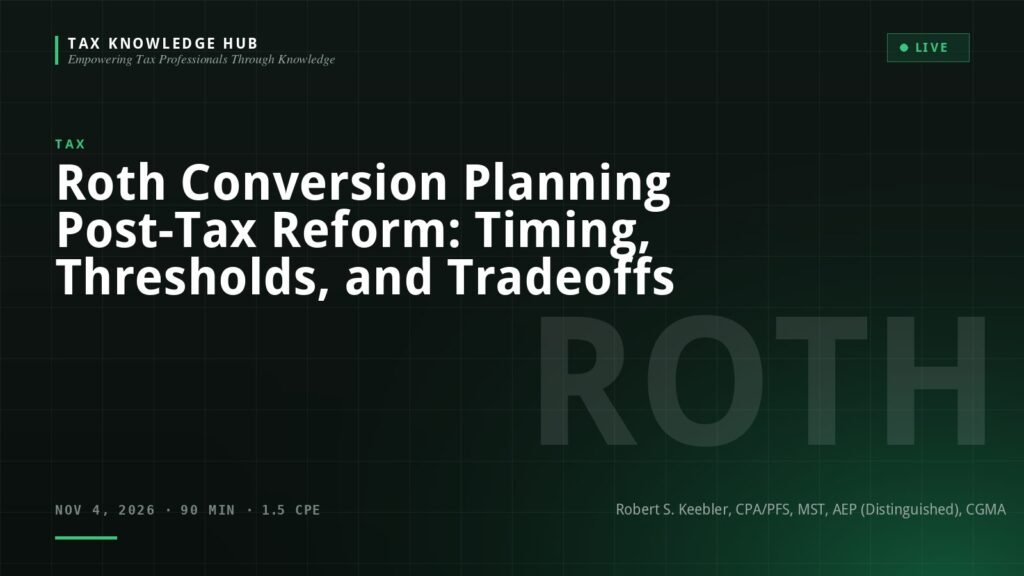
As the OBBB reshapes tax law and retirement planning, understanding Roth conversions has never been more important. For many people, this is no longer just a retirement strategy; it is a timely opportunity to create long-term tax flexibility, manage future tax exposure, and potentially protect more of what they have saved.
Roth conversions can be especially valuable because they allow you to move money from tax-deferred accounts into a tax-free account, creating diversification across future tax scenarios. That matters now more than ever, since tax rates, income thresholds, and retirement income planning rules are all in flux. While Roth IRAs have often been marketed to younger workers, many individuals over age 50 are finding that converting now may be one of the most strategic moves available, particularly if they expect higher taxes later or want more control over taxable income in retirement.
The potential benefits can be substantial. If tax rates rise in the future, converting at today’s rates could save hundreds of thousands of dollars over a retirement lifetime. In addition, carefully timed Roth conversions may help reduce or eliminate Medicare IRMAA surcharges, which can translate into thousands of dollars in annual healthcare savings. That makes Roth conversions not just a tax decision, but a broader retirement planning tool that can affect income, healthcare costs, estate planning, and cash flow.
A Roth conversion may be worth serious consideration if you are:
- In a lower-income year and want to take advantage of a lower tax bracket.
- Retired or semi-retired and not yet drawing full Social Security benefits.
- Concerned that future tax rates may be higher than they are today.
- Trying to reduce required minimum distributions later.
- Looking to pass on more tax-efficient assets to heirs.
- Managing income carefully to avoid higher Medicare premiums.
- Holding pre-tax retirement savings that may otherwise create a large future tax burden.
The key is not simply whether to convert, but how much to convert and when. A poorly timed conversion can trigger unnecessary taxes or increase Medicare costs, while a well-planned strategy can create lasting value. This webinar will break down how recent legislation may affect Roth IRA strategies and highlight practical steps you can take to make informed, tax-efficient decisions.