Delivery methodSelf Study (Digital Download / Transcript)
LocationVirtual / Online
PrerequisitesNone
Attendance requirementNo
Field of studyTaxes
Course Overview:
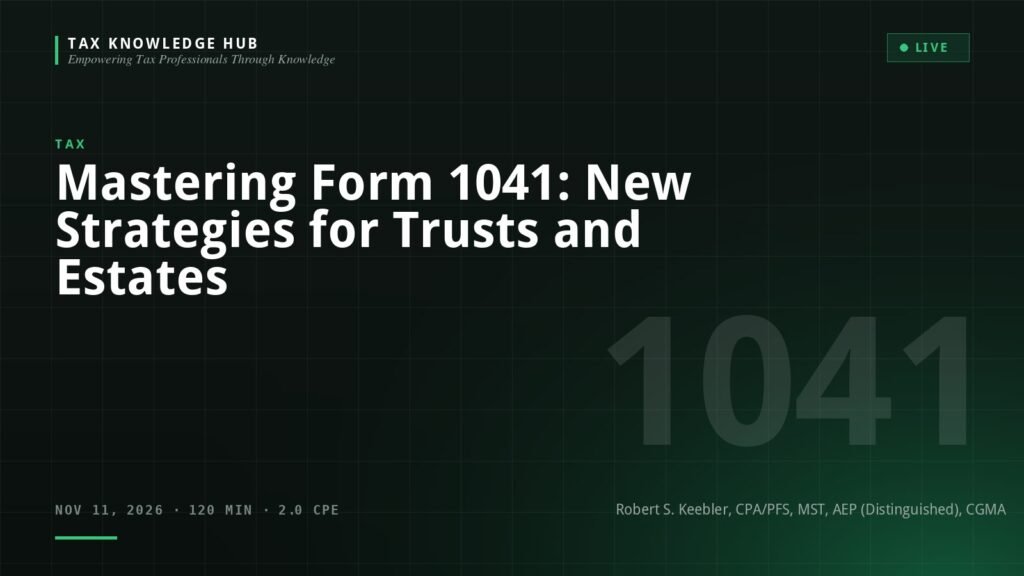
Fiduciary tax law is one of the most nuanced areas in tax practice, but mastering it opens the door to delivering exceptional value for high-net-worth clients with complex estate and trust structures. This course takes you step by step through essential planning strategies, from the basics of grantor trusts to advanced Form 1041 filings.
Your clients already have, or soon will have, settled trusts and taxable estates requiring careful federal income tax planning and compliance. These matters involve specialized rules that go far beyond standard individual returns. In this power-packed session, renowned tax attorney Bob Keebler walks you through the most critical fiduciary tax issues practitioners face today.
You will gain practical, actionable insight on optimizing tax outcomes, staying compliant with the latest reforms, and applying real-world strategies your clients can benefit from immediately.
Learning Objectives:
After completing this session you will be able to:
01Distinguish between the four primary trust types for income tax purposes - simple, complex, grantor and charitable - and identify the tax treatment applicable to each.
02Apply Form 1041 filing requirements accurately, including income reporting, deductions and distribution rules, while avoiding the most common compliance errors.
03Calculate Distributable Net Income and explain how it determines the tax consequences of distributions to beneficiaries.
04Utilize advanced planning strategies including the IRC 663(b) 65-Day Rule, income shifting through distributions and bracket management, to minimize fiduciary income tax liability.
05Identify the impact of the 3.8% Net Investment Income Tax and passive activity rules on trusts and estates, and apply strategies to reduce exposure.
06Recognize the reporting requirements for grantor trusts, DAPTs, QSST and ESBT elections, and the IRC 691(c) deduction.
Topics Covered:
Taxable income versus fiduciary accounting income.
Distributable Net Income (DNI).
IRC 663(b) - the 65-Day Rule.
The tier system and separate share rule.
Passive activity rules for trusts and the 3.8% Net Investment Income Tax.
IRC 691(c) deduction and deductions on termination.
QSST and ESBT elections, and shifting income through trust distributions.
State income tax planning for trusts, grantor trust and DAPT reporting, with Form 1041 worked examples.
Robert S. Keebler, CPA/PFS, MST, AEP (Distinguished), CGMA is a partner with Keebler & Associates, LLP and the current chairman of the AICPA Advanced Estate Planning Conference. In 2007 he was inducted…
Robert S. Keebler, CPA/PFS, MST, AEP (Distinguished), CGMA is a partner with Keebler & Associates, LLP and the current chairman of the AICPA Advanced Estate Planning Conference. In 2007 he was inducted into the Estate Planning Hall of Fame of the National Association of Estate Planners & Councils. He has also been named by CPA Magazine as one of the Top 100 Most Influential Practitioners in the United States and one of the Top 40 Tax Advisors to Know During a Recession.
His practice includes family wealth transfer and preservation planning, charitable giving, retirement distribution planning, and estate administration.